NEONATOLOGISTS FROM SIX COUNTRIES SHARE THEIR EXPERIENCES
13.11.2026
On 15 November, the world marks World Prematurity Day — a day dedicated to babies who arrived a little earlier than expected, before 37 weeks of pregnancy. Today, doctors are caring for newborns weighing less than 500 grams, and many of these tiny babies go on to grow up healthy.
We spoke to leading neonatologists from China, Türkiye, Ireland, Qatar, Kyrgyzstan and Kazakhstan to discover the extraordinary dedication behind that joyful moment when a baby is finally well enough to go home with their mother.
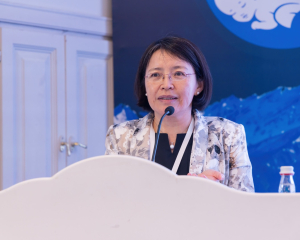
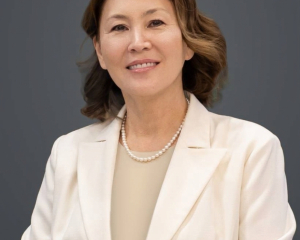
Tongyan Han, China: Saving a baby weighing just 450 grams is now a reality
Neonatal care in China has advanced rapidly over the past 15 years. In 2010, Chinese doctors were able to care for babies born at 28 weeks of pregnancy. Today, they are successfully treating newborns delivered at 26 weeks, and even as early as 23 weeks.
According to Professor Tongyan Han, Head of the Department of Paediatrics at Peking University Third Hospital, these achievements reflect years of intensive work. More than 2,000 babies are admitted to the hospital’s neonatal intensive care unit every year, most of them premature.
One of the most memorable cases in her career involved a baby born at just 23 weeks, weighing only 450 grams. That child is now two years old and doing well.
“To every mother whose baby was born prematurely, and who may be reading this article while worrying about her little one, I want to say: your child has a very good chance of growing up healthy. Your love and support will make an enormous difference,” says Professor Han.
Ömer Erdeve, Türkiye: A Turkish tradition of giving gold to mothers and newborn babies
The neonatal intensive care unit at Ankara University Faculty of Medicine’s Children’s Hospital is a Level IV facility, the highest level of neonatal care, where the most critically ill babies are treated.
Some of these babies are particularly long-awaited children, whose parents have spent 15 or even 20 years hoping to start a family, only for them to arrive prematurely.
Professor Ömer Erdeve, a specialist in paediatrics and neonatology, works at the hospital.
“Over the years, I have cared for more than a thousand babies in Türkiye, The Gambia, Azerbaijan, Laos and Mozambique. Every single one is the most precious person in their family’s life.
“It is impossible to describe the feeling of successfully caring for such a tiny baby and placing them in their delighted parents’ arms, saying, ‘Here is your child.’ “These are the moments that make working in neonatology worthwhile. They are precisely why I chose this profession 22 years ago,” Professor Erdeve recalls.
For the past two years, Professor Erdeve has been using artificial intelligence in his clinical practice. Equipment in the neonatal intensive care unit continuously collects information about each baby’s condition, while AI rapidly analyses the data, helping doctors identify problems and begin treatment earlier.
Nevertheless, Professor Erdeve believes that the most important factor in a premature baby’s development is not technology, but family. At his hospital, relatives are encouraged to participate as fully as possible in caring for the baby. He emphasises that family love and involvement play an essential role in the development of a child’s nervous system.
“To men whose wives have given birth prematurely, I would say: support your partners and take an active part in caring for your baby.
“In Türkiye, we have a beautiful tradition. When a child is born, gold coins are given to the mother and baby, traditionally pinned to their clothing. I don’t know whether Kazakhstan has a similar custom, but I think it is a wonderful expression of support and gratitude for a new life,” Professor Erdeve concludes.
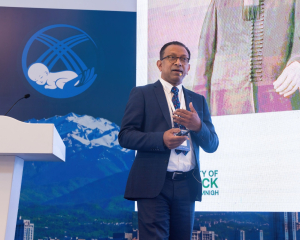
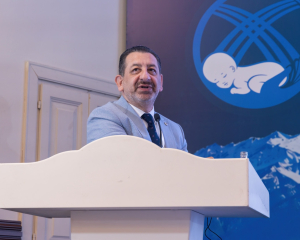
Roy Philip, Ireland: Mother’s milk is an essential part of treatment
During his 30-year career in neonatology, Professor Roy K. Philip has worked in India, the United Kingdom and Ireland, witnessing major advances in the care of premature babies across all three countries. Yet he considers one development particularly significant: the international medical community’s recognition that human milk is an integral part of intensive care for premature newborns.
“Breast milk contains beneficial bacteria, substances that activate a baby’s immune system, hormones and even stem cells. No infant formula can fully replicate this remarkable combination. Human milk protects babies against infections, reduces their risk of obesity later in life and helps protect premature infants from necrotising enterocolitis, a potentially life-threatening intestinal condition,” Professor Philip explains.
Ireland has had government programmes supporting breastfeeding for 20 years. When a mother of a premature baby cannot produce enough milk, donor human milk is available.
“Ireland has a human milk bank. Mothers from across the country voluntarily donate their surplus breast milk to help other women’s premature babies. The milk is pasteurised and distributed to hospitals, and there is now enough to meet the needs of premature babies throughout the country. These remarkable women are helping to save the lives of babies born too soon, alongside the doctors and nurses caring for them,” he says proudly.
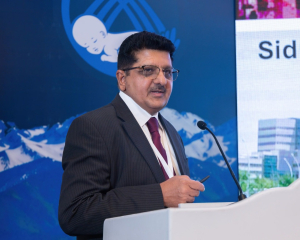
Sameer Gupta, Qatar: Above all, do no harm
When a baby is born prematurely, an anxious mother may understandably believe that the more medicines and procedures her child receives, the sooner they will recover. But is that necessarily true?
Professor Sameer Gupta, who has spent more than 30 years caring for premature newborns, knows that good medicine is not simply about providing treatment promptly. It is also about avoiding interventions that are not necessary.
He currently heads the Neonatology Department at Sidra Medicine in Doha, where specialists care for babies born at 22–23 weeks of pregnancy, some weighing less than 500 grams.
“To help the smallest babies, we must understand newborn physiology in great depth, assess each child at the right time and intervene only when there is a genuine clinical need. The most important principle of our work is to do no harm,” the professor explains.
This approach was supported by the findings of Baby-OSCAR, a major long-term study led by Professor Gupta. The study involved 653 babies born between 23 and 28 weeks of pregnancy who had a patent ductus arteriosus — a blood vessel near the heart that remained open after birth. Previously, doctors often tried to close this vessel with medication as quickly as possible, believing that leaving it open could damage a baby’s lungs, intestines and brain.
However, the study found that administering medication during the first days of life did not improve survival or long-term health outcomes. In many newborns, the vessel closes naturally over time. Professor Gupta therefore recommends careful ultrasound monitoring of the baby’s heart, with treatment reserved for cases where complications develop. Sometimes, what a tiny baby needs most is simply time to grow stronger.
Sagynbu Abduvalieva, Kyrgyzstan: Mountains are no barrier when a baby’s life is at stake
Imagine a premature baby being born in a mountain village that is difficult to reach by road during winter. For doctors in Kyrgyzstan, where mountains cover much of the country, caring for babies in such circumstances is part of everyday clinical practice.
Today, newborns requiring specialist treatment are transported to hospitals by road ambulance or air ambulance. In the future, the country hopes to establish a dedicated neonatal intensive care transport service to help save even more young lives. Despite these challenges, neonatal mortality in Kyrgyzstan is gradually declining.
“Unfortunately, our neonatal mortality rate remains among the highest in Central Asia,” says Sagynbu Abduvalieva, Kyrgyzstan’s Chief External Neonatology Specialist.
She explains that, in recent years, doctors and nurses across Kyrgyzstan have been adopting standardised clinical protocols based on evidence-based neonatal care. The aim is to ensure that every newborn receives treatment according to the same modern clinical standards, whether they are born in the capital or in a remote mountain district.
Yet behind every clinical protocol are people: doctors and nurses throughout the country who regard saving newborn lives not simply as a job, but as a vocation. Sagynbu Abduvalieva discovered her calling while still at school, when she accompanied her sister during a shift at a maternity hospital.
“The birth of a baby, the parents’ happiness, and the extraordinary tenderness with which my sister and the entire medical team cared for mothers and newborns made a lasting impression on me.
“That was when I firmly decided to devote my life to the smallest patients,” she recalls.
She has carried that feeling throughout her career and now encourages younger colleagues to remember what matters most.
“Love babies, love people and help them. Never stop improving your knowledge and skills, because there is no limit to how much we can learn.”
Bekturgan Karin, Kazakhstan: From 23 per thousand to just three — and there is still more to achieve
In recent years, news reports have increasingly celebrated Kazakhstani doctors successfully caring for another baby weighing just 500 grams. Yet not so long ago, saving the lives of such tiny newborns seemed almost unimaginable.
Premature babies grow stronger in incubators — small, warm environments where temperature and humidity are carefully controlled. When they cannot breathe independently, neonatologists provide mechanical ventilation. Following complex operations, neonatal teams work alongside paediatric surgeons to support these vulnerable patients through recovery.
Increasingly, babies can now receive this specialist care close to home. For example, in 2025, a neonatal surgery department opened at the Atyrau Regional Perinatal Centre with support from AYALA Charity Foundation and Tengizchevroil.
Previously, newborns requiring emergency surgery had to be transferred to other hospitals, sometimes even to the capital, losing precious time along the way. Today, doctors can provide life-saving surgical treatment locally.
Within the first few days of the department opening, surgeons performed heart surgery on a baby born at 31 weeks of pregnancy.
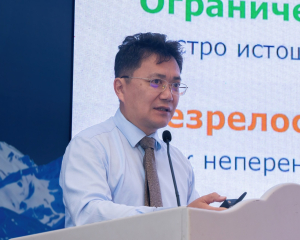
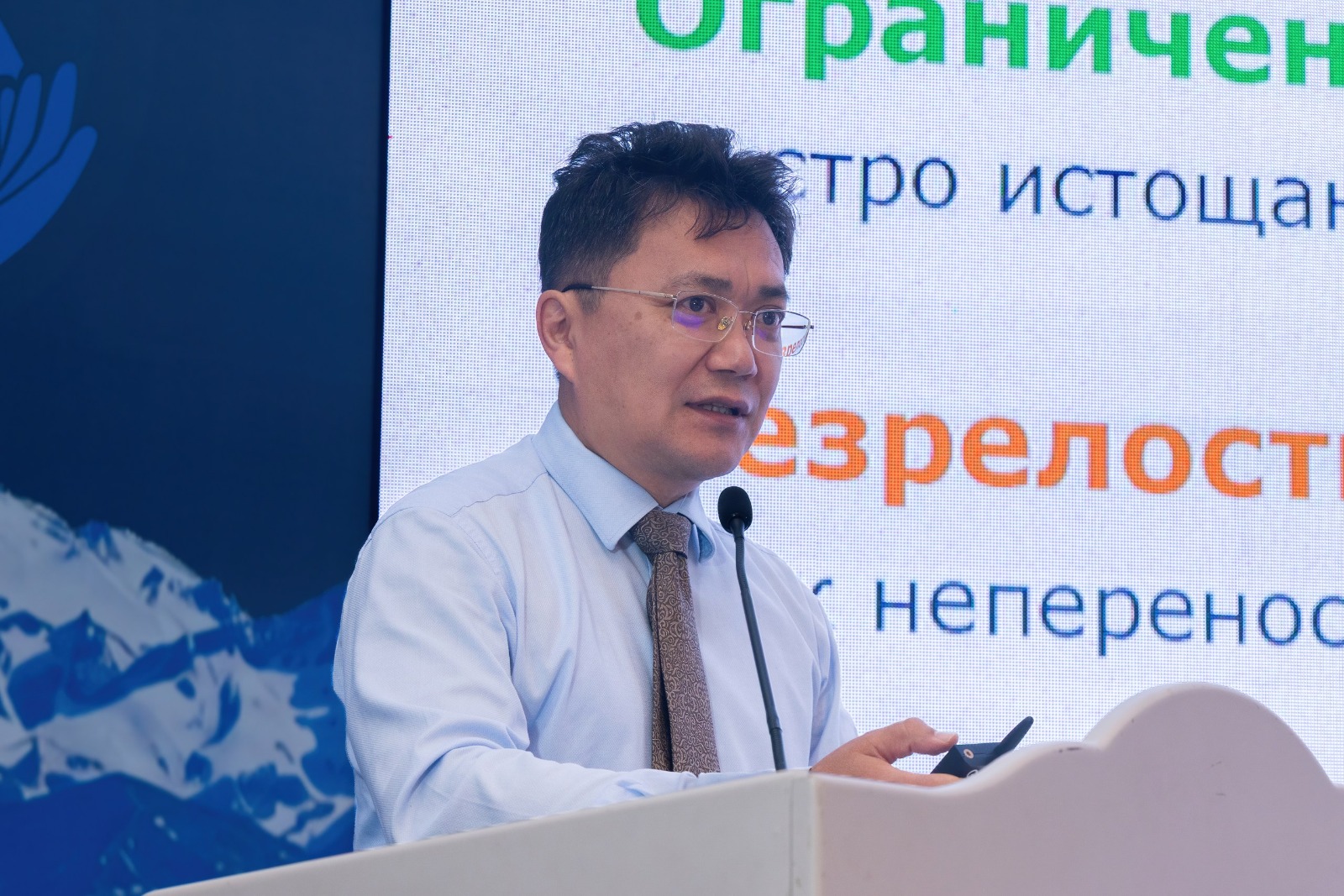
“In the early 1990s, 23 out of every 1,000 newborn babies died before reaching one month of age. Today, that figure has fallen to three per 1,000 live births — or three per mille, as we express it medically. This is the lowest neonatal mortality rate in Central Asia. But we do not intend to stop there. Our goal is to reduce neonatal mortality to one or two deaths per 1,000 live births, comparable to the levels achieved in developed European countries,” says Bekturgan Karin, Kazakhstan’s Chief External Neonatology Specialist.
Kazakhstan has approximately 700 practising neonatologists. For a professional community of this size, sharing clinical experience and pursuing continuous professional development are particularly important. AYALA Charity Foundation, the only charitable foundation in Kazakhstan specialising in neonatology, is among the organisations supporting this work.
AYALA Foundation: 250,000 young lives saved over 19 years
Two things are essential to the successful care of premature newborns: modern medical equipment and highly skilled professionals who know how to use it. For 19 years, AYALA Charity Foundation has helped strengthen both areas of neonatal care in Kazakhstan.
With the Foundation’s support, 68 neonatal resuscitation and intensive care units have been equipped with modern medical technology.
Using equipment donated by AYALA, doctors have saved the lives of 250,000 children, while the Foundation’s educational programmes have reached more than 4,800 doctors and nurses across a range of medical specialties.
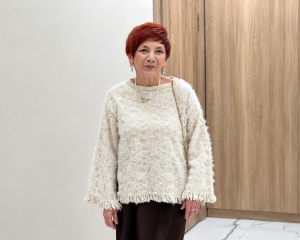
“Neonatologists are among the first people to welcome a baby into the world, gently helping them take their very first breath. Their work is not always visible to the wider public, yet behind thousands of young lives saved lies their painstaking dedication. On World Prematurity Day, I want to thank every neonatologist and every nurse for the patience, expertise and compassion they give to their smallest patients. I also want to congratulate all the mothers and fathers whose babies arrived earlier than expected. You and your children have come an extraordinary distance together, and this day belongs to you as much as it does to anyone,” says Aidan Suleimenova, Founder and President of AYALA Charity Foundation.