ACCESS TO SURGICAL TREATMENT FOR CHILDREN WITH SEVERE EPILEPSY EXPANDED
04.11.2026
Up to 4,500 children may need epilepsy surgery each year. Kazakhstan’s first 128-channel video-EEG monitoring system has become operational in Almaty, enabling more accurate diagnosis of complex forms of epilepsy and supporting neurosurgical procedures.
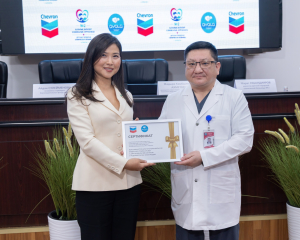
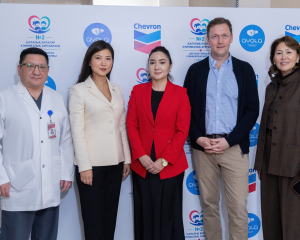
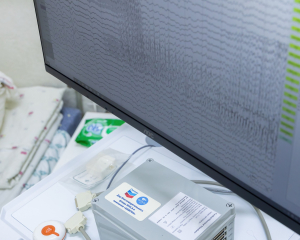
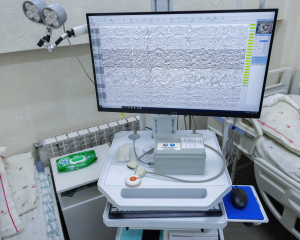
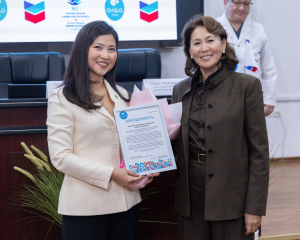
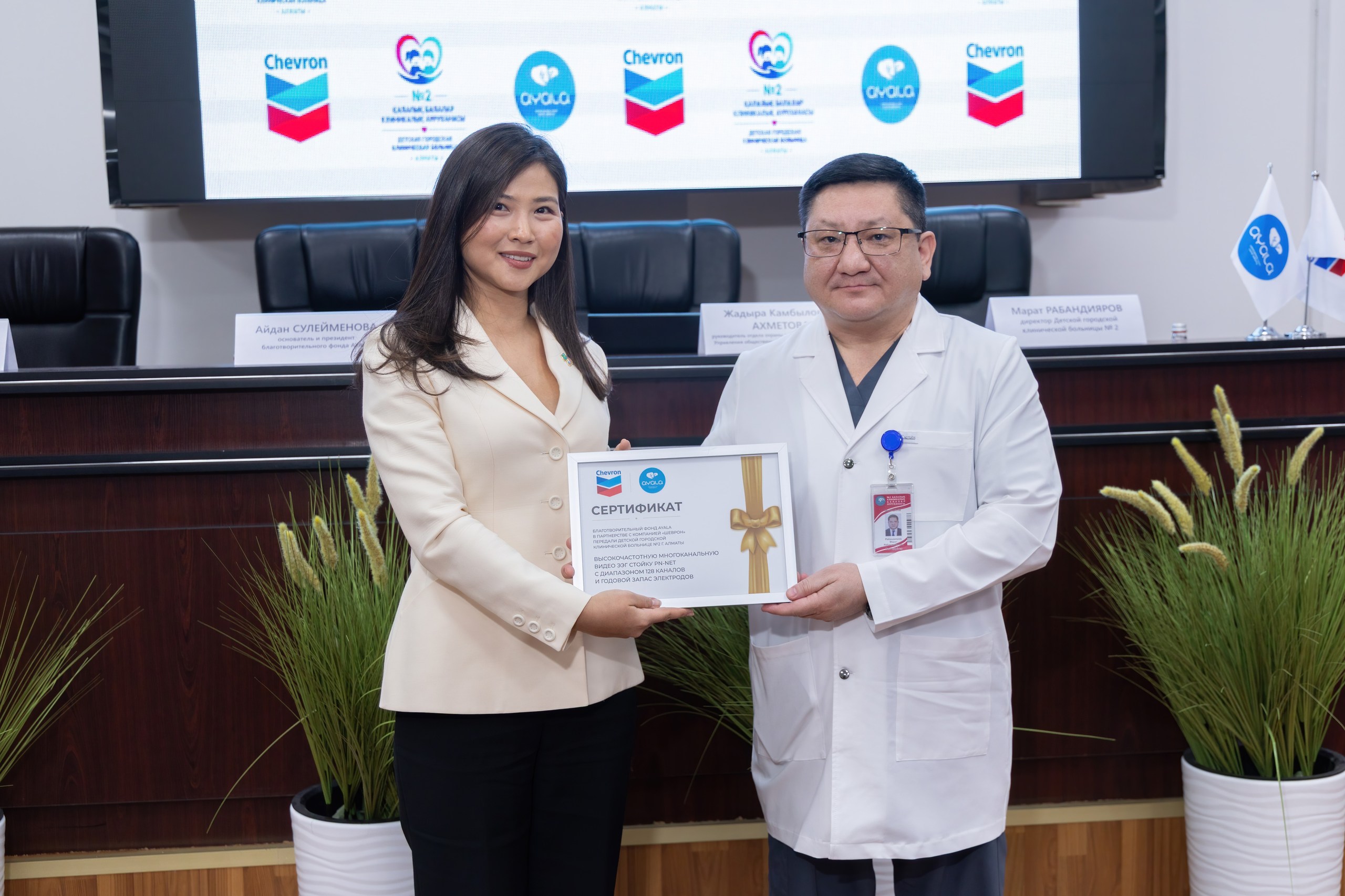
Kazakhstan’s first 128-channel video-electroencephalography (video-EEG) monitoring system has become operational at Almaty City Children’s Clinical Hospital No. 2. The system enables prolonged recording of the brain’s electrical activity while simultaneously capturing video of the patient’s behaviour. Its principal advantage is the number of recording channels, several times greater than that of conventional EEG systems. This provides a more detailed picture of electrical activity in the brain and helps clinicians pinpoint where seizures originate. The system also helps distinguish epileptic from non-epileptic seizures, plan neurosurgical interventions, monitor patients after surgery and assess patients under anaesthesia or in a coma. The equipment was donated to the hospital by AYALA Charity Foundation in partnership with Chevron.
Epilepsy is a chronic brain disorder characterised by recurrent convulsive and non-convulsive seizures caused by abnormal electrical activity in the brain’s nerve cells. In Kazakhstan, epilepsy is classified as a socially significant disease. According to the Unified Register of Patients Under Dispensary Observation, approximately 94,000 people are registered with epilepsy in the country, including 31,000 children.
The government allocates approximately KZT 4 billion each year to provide medication for these patients. However, some children continue to experience seizures despite anti-seizure treatment. This is known as drug-resistant epilepsy. In complex cases, doctors may recommend surgery to remove the seizure focus or, where there are several foci in functionally important areas of the brain, to ablate them.
A decision to operate is made only after a detailed assessment of the brain. The new video-EEG monitoring system can be connected to depth electrodes during implantation and used to record activity in deep brain structures over an extended period. Conventional EEG systems with fewer channels do not offer this capability.
Zhanar Koshpanova, Social Investment Adviser at Chevron Eurasia, commented: “According to WHO estimates, around 50 million people worldwide live with epilepsy, including thousands of children in Kazakhstan. Unfortunately, when medication cannot control seizures, a child’s quality of life and development suffer. Families who can afford it take their children abroad for treatment. Recognising that this care can and should be available to all children in Kazakhstan, Chevron supported the purchase of a modern video-EEG monitoring system and training for paediatric neurosurgeons, neurologists and neurophysiologists in new methods of surgical treatment. This is making accurate diagnosis and the necessary treatment available in Kazakhstan, without the need to travel abroad.”
At AYALA’s invitation, Professor Ulrich-Wilhelm Thomale, Head of Paediatric Neurosurgery at Charité – Universitätsmedizin Berlin, one of the world’s leading university hospitals, travelled to Almaty to help strengthen the skills of Kazakhstani clinicians. Professor Thomale specialises in paediatric neurosurgery and neuro-oncology, including epilepsy surgery. The masterclass began with hands-on training in the use of the new system. The professor then worked alongside Kazakhstani neurosurgeons to operate on 12-year-old Alikhan, who has drug-resistant epilepsy, using the new equipment. The doctors first implanted electrodes into deep structures of the brain to locate the sources of epileptic activity precisely. A few days later, once the seizure foci have been identified, the specialists will either remove them surgically or destroy them through targeted treatment delivered via the same electrodes.
Almaty City Children’s Clinical Hospital No. 2 has neurosurgeons and epileptologists with extensive experience in successfully treating complex neurological and neurosurgical conditions. In early 2026, its specialists became the first in Kazakhstan and Central Asia to implant depth electrodes in children to identify seizure foci. At that time, the video-EEG monitoring equipment was provided to the hospital only for a trial period and was returned to the supplier afterwards. This forced a pause in the provision of advanced treatment for children. The hospital now has its own system, allowing doctors to provide this diagnostic and surgical care on a permanent basis to children from across Kazakhstan.
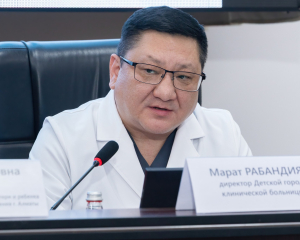
Marat Rabandiyarov, Director of City Children’s Clinical Hospital No. 2, said: “Our specialists have already demonstrated their ability to implant depth electrodes. The only thing we lacked for routine practice was equipment of our own. We are extremely grateful to AYALA and Chevron for their support. Initially, we plan to carry out 200–300 video-EEG examinations and 20 operations each year. This will allow us to help not only children with drug-resistant epilepsy but also those with brain tumours accompanied by seizures.”
Over the first ten years, the 128-channel video-EEG monitoring system is expected to enable approximately 2,500 diagnostic examinations and at least 300 operations at the hospital. As the volume of care grows, the hospital has the potential to become a reference centre for epilepsy diagnostics in Kazakhstan and Central Asia.
Aidan Suleimenova, Founder and President of AYALA Charity Foundation, emphasised: “The video-EEG monitoring system is designed for many years of use. Although equipment of this kind is normally due for replacement after five to seven years, our experience shows that equipment donated by the Foundation can remain in service for 10–15 years. For more than 19 years, AYALA has worked closely with healthcare institutions across Kazakhstan, helping to equip them with innovative medical technology. The most important lesson we have learnt is that equipment alone is not enough. It can truly help children only when it is used by a properly trained doctor. That is why the Foundation regularly invites leading specialists to train our doctors in different regions of Kazakhstan. We are delighted that our longstanding partner, Chevron, supports us in this work.”