HOW RUNNING BECOMES PART OF SYSTEMIC CHANGE IN HEALTHCARE
29.09.2026
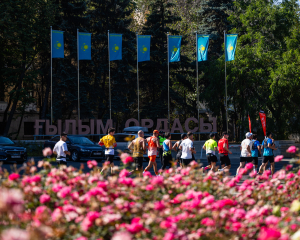
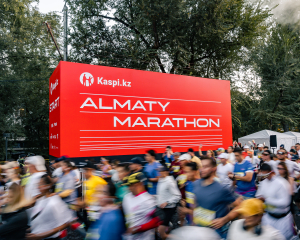
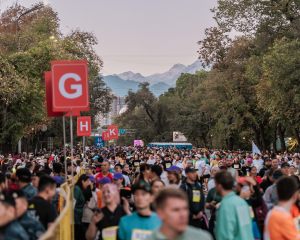
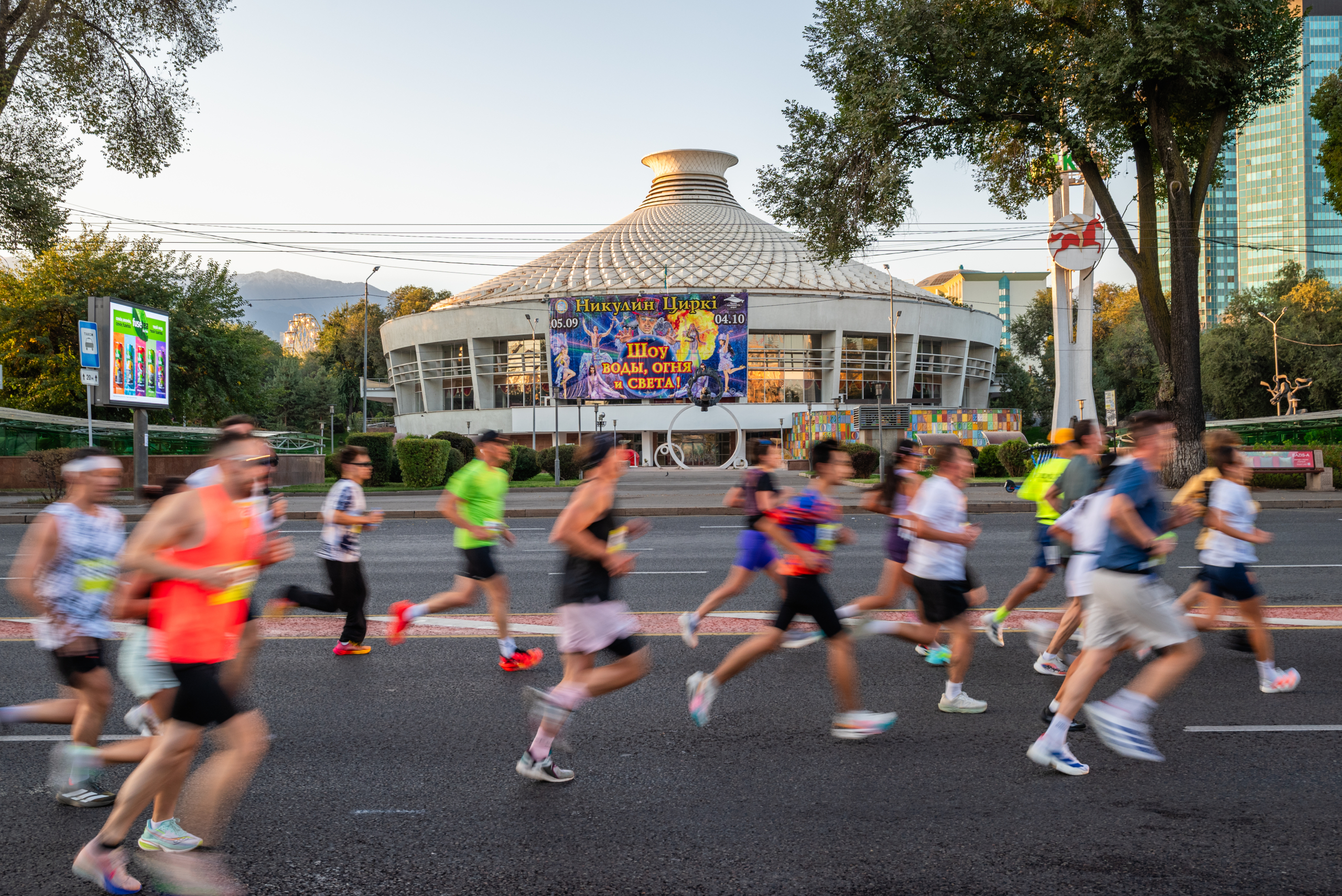
In 2026, Almaty Marathon celebrated its 15th anniversary. The anniversary race took place on 27 September, bringing together 16,000 participants from more than 60 countries. The marathon was conceived from the outset as a private charitable initiative: since the very first race, a proportion of the funds raised through the event has been directed towards social projects.
Over the years, both the scale of the event and the focus of its charitable work have evolved. Initially, the foundation concentrated primarily on creating sports and rehabilitation facilities for children’s institutions in Almaty and the Almaty Region. In recent years, children’s healthcare has become one of its key priorities, with a focus on early diagnosis, prevention of disability and the introduction of treatments that were previously unavailable in Kazakhstan.
Looking at three medical projects, we explore how funds generated by a mass-participation sporting event are channelled into healthcare development, and why, in the long term, such investment may cost the state less than treating severe complications.
How the marathon funds charitable projects
Almaty Marathon has been organised since 2012 by the Courage to Be the First Corporate Foundation as a private initiative. Its main sources of funding are participants’ entry fees and contributions from partners. According to the foundation, registration fees account for around 40% of revenue, while sponsorship contributes 60%.
The event’s budget varies depending on its scale and cost structure. In 2025, it amounted to KZT 542.9 million, while in 2026 it is projected to reach KZT 664.7 million.
At the same time, the amount allocated to charitable projects continues to grow. KZT 65.5 million was allocated to projects in 2023–2024, KZT 106.2 million in 2024–2025, and KZT 142 million in 2025–2026. This represents an initial increase of 62%, followed by a further 34%.
Over 15 years, the Courage to Be the First Corporate Foundation has directed more than KZT 500 million towards over 30 charitable projects. Beneficiaries have included specialist schools, boarding schools, children’s centres, hospices and healthcare facilities. The projects have created sports and outdoor fitness areas, sensory rooms and spaces for therapeutic exercise, as well as providing rehabilitation and medical equipment.
Since 2024, a significant share of the charitable budget has been directed towards children’s healthcare. Over two years, the Courage to Be the First Corporate Foundation, together with AYALA Charity Foundation and with the support of the Ministry of Healthcare, has allocated KZT 248.3 million to three medical projects. The One-Day Clinic project cost KZT 79.5 million, the two stages of the I See the World project KZT 51.1 million, and the Let’s Breathe Life project KZT 117.6 million.
The model is similar in all three cases: healthcare facilities receive equipment, doctors undergo training, and patients gain access to diagnosis or treatment within Kazakhstan — in two of the projects, directly in their own region.
One-Day Clinic: identifying risks during pregnancy
The One-Day Clinic project, worth KZT 79,541,284, is being implemented at Regional Perinatal Centre No. 2 in the Turkistan Region. Its aim is to identify genetic risks and congenital conditions early in pregnancy by bringing the key examinations and consultations together in a single medical centre.
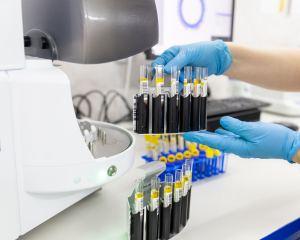
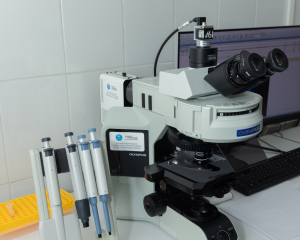
The programme includes specialist ultrasound examination, biochemical screening and a medical consultation, as well as molecular genetic testing where clinically indicated. Each patient is supported by a multidisciplinary team of obstetricians and gynaecologists, geneticists, ultrasound specialists and other relevant clinicians. If screening indicates a high risk of chromosomal abnormalities, a multidisciplinary medical panel determines the next steps in her care.
The equipment is also used to examine children already born who are suspected of having rare genetic disorders. The earlier a diagnosis is made, the sooner doctors can determine the appropriate treatment and rehabilitation programme. Specialists estimate that up to 30,000 patients could be examined through the project over 15 years. Early diagnosis and a well-defined patient pathway are expected to help reduce infant disability in the region by up to 40%. Previously, genetic testing was available only through private laboratories.
“The effectiveness of modern prenatal diagnosis is determined not by a single test, but by how the entire system of care is organised. It is important that examinations take place in specialist centres equipped with modern technology and that decisions are made by a multidisciplinary team. A unified patient pathway and the use of modern molecular genetic methods are equally important. This approach improves diagnostic accuracy, enables congenital and inherited conditions to be detected early in pregnancy, and allows timely, evidence-based clinical decisions to be made,” says Gulshara Abildinova, Chief Freelance Geneticist at Kazakhstan’s Ministry of Healthcare.
I See the World: protecting the sight of premature babies
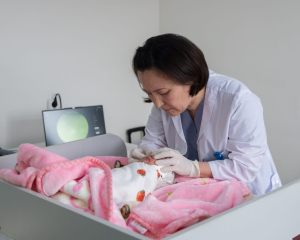
The I See the World project focuses on the early diagnosis and treatment of retinopathy of prematurity, a condition that can lead to irreversible sight loss without timely intervention.
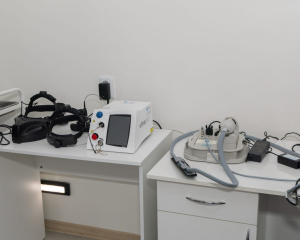
In the first phase, a retinal camera worth KZT 26.7 million was installed at the City Perinatal Centre in Shymkent. The equipment enables premature babies to be screened, retinopathy to be detected at an early stage, and children to be referred for treatment without delay. The partners estimate that up to 24,000 children could be screened over the next 10–15 years.
In the second phase, the project was extended to the Turkistan Region, where more than 60,000 babies are born each year, around 5,000 of them prematurely. Laser equipment worth KZT 24,445,000 was installed at Regional Perinatal Centre No. 3 in Turkistan. Previously, newborns requiring this procedure had to be referred to other regions. They can now receive the necessary treatment locally.
Doctors estimate that 120–200 babies may require urgent treatment each year. With the equipment expected to remain in service for around ten years, between 1,200 and 2,000 children could receive treatment.
The project goes beyond the provision of equipment. Doctors receive training involving international specialists, while healthcare facilities introduce modern approaches to the diagnosis and treatment of retinopathy of prematurity.
“For us, it is important that charity should not be limited to a one-off donation of equipment. Together with AYALA Charity Foundation, the Ministry of Healthcare and medical institutions, we are creating the conditions for new technologies to continue serving patients while knowledge and expertise remain with Kazakhstani specialists. In this model, sport brings people together around long-term change: part of every entry fee is transformed into medical equipment, training for doctors and an opportunity for children to receive the care they need within the country. In this way, an individual’s decision to stand on the start line becomes a contribution to the development of children’s healthcare,” says Saltanat Kazybayeva, Executive Director of the Courage to Be the First Corporate Foundation.
Let’s Breathe Life: introducing a new treatment in Kazakhstan
The third project goes beyond diagnosis and introduces a treatment method that is new to Kazakhstan.
Vascular malformations are congenital abnormalities affecting the development of blood or lymphatic vessels. They can cause pain and bleeding, compress surrounding tissues and impair organ function. More than 40 children with these conditions are born in Kazakhstan each year. Depending on the type and extent of the lesion, they may require prolonged, multi-stage treatment.
The Let’s Breathe Life project is worth KZT 117,600,320. As part of the project, the Scientific Centre of Paediatrics and Paediatric Surgery in Almaty will be equipped to perform sclerotherapy using reversible electroporation. During the procedure, a medicinal agent is injected into the vascular lesion and electrical pulses are applied. The technique targets abnormal vessels while minimising the impact on healthy tissue.
Before the project began, four Kazakhstani specialists completed training at University Hospital Halle in Germany. Once the method is introduced, up to 50 children a year will be able to receive treatment within Kazakhstan.
The project will not meet Kazakhstan’s entire need for the treatment of vascular malformations. It will, however, lay the foundations for a new field of high-tech medical care within the country and reduce the number of patients who need to be sent abroad.
“Today, we cannot say that Kazakhstan’s need for treatment across all types of vascular malformation will be fully met. However, this project lays the foundation for developing a new area of high-tech medical care. We are training Kazakhstani specialists in modern techniques so that they can use them here at home. This will gradually increase the number of patients able to receive treatment within the country, reduce spending on treatment abroad and ease the financial burden on families. Alongside the technology, Kazakhstan will also develop its own school of expertise in treating vascular malformations,” says Aidan Suleimenova, Founder and President of AYALA Charity Foundation.
How prevention can reduce public expenditure
The economic impact of each project takes a different form. One-Day Clinic helps identify risks earlier and determine the appropriate course of care; I See the World helps prevent sight loss and the disability associated with it; and Let’s Breathe Life reduces the need for treatment abroad.
The foundations provide their clearest calculation for the programme to prevent retinopathy of prematurity. According to their figures, preserving one child’s sight through early diagnosis and timely treatment costs around KZT 63,000. By comparison, the state disability benefit is KZT 81,871 per month.
Over 18 years, such payments to one person would amount to around KZT 17.7 million. Applying this calculation to the 24,000 children the programme is expected to reach, the state’s potential obligations could amount to KZT 424.4 billion over 18 years, or an average of KZT 23.6 billion a year.
This is a maximum-case scenario, not a forecast of actual savings: it assumes that, without timely care, all 24,000 children would develop a disability. The calculation nevertheless illustrates the difference between the cost of early intervention and the long-term expense of medical and social support. Preventing even a proportion of such cases can reduce expenditure on complex surgery, rehabilitation, specialist education and social support.
The economic logic behind Let’s Breathe Life is different. The project costs KZT 117.6 million, while between 2021 and 2024 the state spent more than KZT 437 million treating patients with vascular malformations abroad. Investing in equipment and specialist training makes it possible to move away from repeatedly paying for treatment overseas and towards developing domestic medical expertise. The equipment and knowledge remain in Kazakhstan and can benefit new patients for many years to come.
In this way, prevention and the introduction of treatment within the country change the spending model itself: resources are directed not only towards dealing with consequences, but also towards building a system that helps prevent them. The next step is to record annually the number of patients screened and treated, cases of disability prevented and overseas referrals avoided, so that the projects’ social impact can also be expressed in measurable economic terms.
How sport becomes part of systemic change
In this model, the marathon becomes a platform that brings thousands of people together around a shared goal. Each participant’s registration may seem like an individual act, but collectively these contributions are transformed into hospital equipment, training for doctors and new treatment opportunities for children in Kazakhstan.
This is possible because different organisations work together. The Courage to Be the First Corporate Foundation raises funds through sporting events; AYALA Charity Foundation identifies the most pressing medical needs and brings in the necessary expertise; and the Ministry of Healthcare and medical institutions help integrate equipment and new methods into the healthcare system.
As a result, a private initiative goes beyond one-off assistance. Regions gain the infrastructure they need, Kazakhstani specialists master modern technologies, and families gain access to diagnosis and treatment closer to home. The knowledge and equipment remain in the country and continue to benefit patients long after the project itself has ended.
This is how sport becomes a vehicle for social change. It helps foster a culture of care, brings together individuals, businesses, charities and the state, and gives participation in the marathon a meaning that extends far beyond the finish line.
https://comode.kz/post/kak-beg-stanovitsya-castyu-sistemnyx-izmenenii-v-zdravooxranenii