HOW KAZAKHSTAN LEARNT TO CARE FOR PREMATURE BABIES
01.10.2026
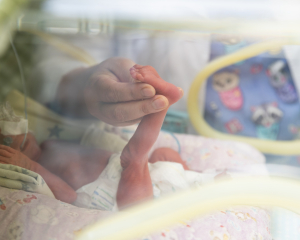
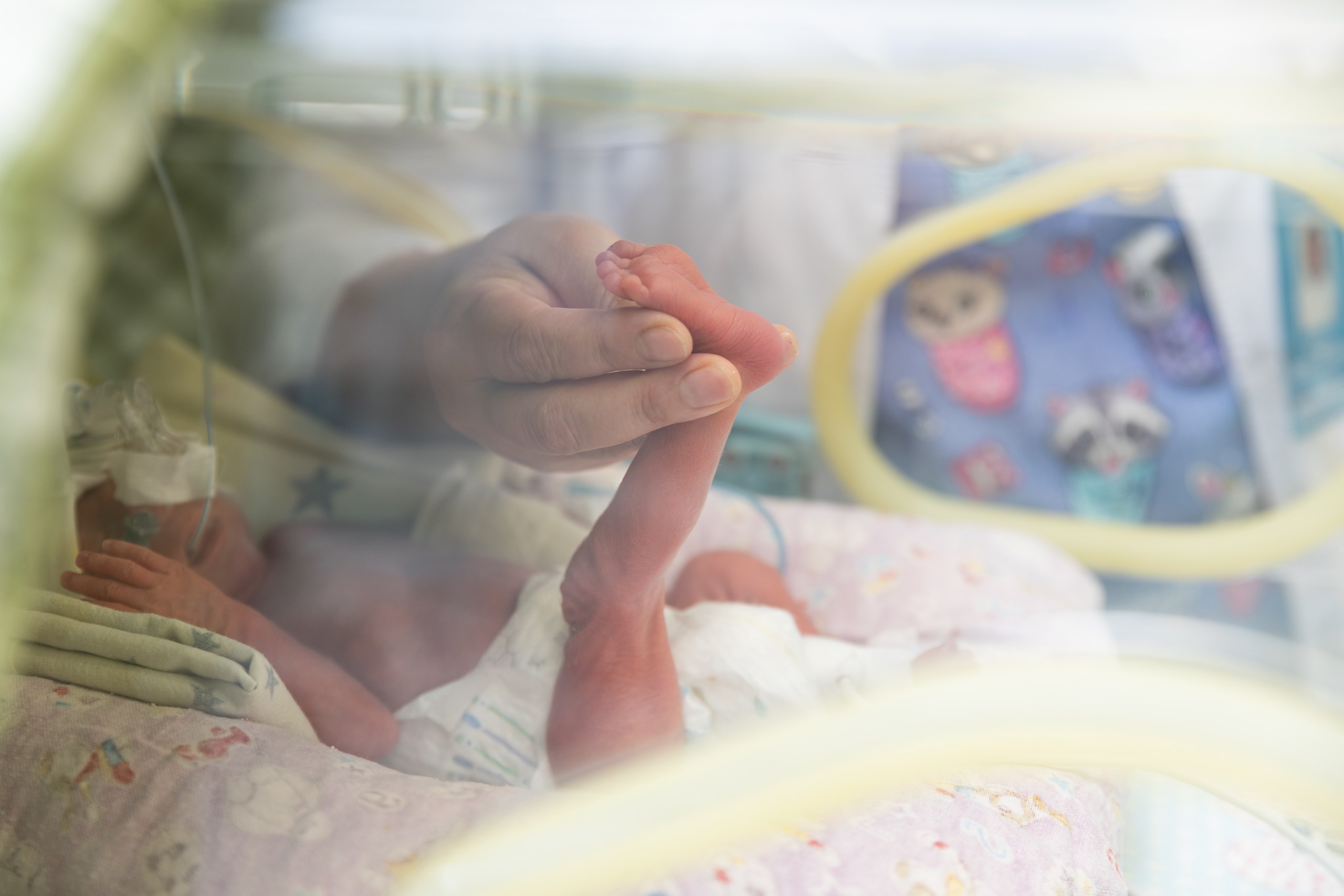
Five hundred grams — that is how little the smallest patients cared for by Kazakhstan’s neonatologists can weigh. A baby this tiny can fit easily into the palm of an adult’s hand. Yet from the very first minute, hospital staff see each child as an individual, with a personality of their own, innate abilities and unique talents. They simply need help to take that first breath and grow strong enough, one day, to make their presence felt in the world.
Kazakhstan’s neonatal care has much to be proud of. Since independence, neonatal mortality in the country has fallen almost sevenfold, while babies born weighing as little as 500 grams are now successfully cared for not only in national centres but also in regional perinatal centres. This is the result of 35 years of joint work by doctors, the state and its partners. These achievements have received international recognition: the United Nations has announced that Kazakhstan reached its Sustainable Development Goal target for reducing maternal, child and neonatal mortality ahead of schedule.
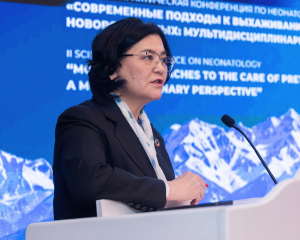
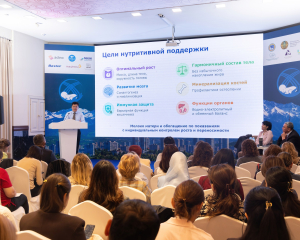
How Kazakhstan achieved this progress, which approaches are helping to save the lives and protect the health of premature babies today, and what challenges still lie ahead were among the issues discussed at the 2nd Scientific and Practical Conference on Neonatology, ‘Modern Approaches to the Care of Premature Newborns: A Multidisciplinary Approach’. Held in Almaty on 24–25 September, the conference brought together specialists from 16 countries. More than 150 neonatologists attended in person, while the online broadcast was watched by over 1,500 doctors from every region of Kazakhstan and from abroad, including Russia, Israel and Peru.
The conference was organised at the initiative of the Ministry of Healthcare of the Republic of Kazakhstan, with the participation of the Almaty Public Health Department, the Congress of Obstetricians, Gynaecologists and Neonatologists of Kazakhstan, the Centre for Perinatology and Paediatric Cardiac Surgery, Astana Medical University and AYALA Charity Foundation.
Three per thousand: the best rate in Central Asia
One of the key indicators of neonatal care is the neonatal mortality rate. It shows how many babies out of every 1,000 live births do not survive the first 28 days of life.
According to Magripa Yembergenova, Director of the Department of Maternal and Child Health at Kazakhstan’s Ministry of Healthcare, neonatal mortality has fallen almost sevenfold since independence — from 23 to 3 deaths per 1,000 live births. According to international organisations, this is the lowest rate in Central Asia. Over the same period, maternal mortality in Kazakhstan has fallen sixfold, from 67–70 to 10 deaths per 100,000 live births.
‘The turning point came in 2008, when Kazakhstan adopted the World Health Organization’s live-birth criteria. This enabled us to build an integrated perinatal care system, while government programmes equipped perinatal centres to world-class standards. But the most important thing is not to stop at what has already been achieved, but to continue developing and strengthening the service. We have set ourselves an ambitious goal: to reduce neonatal mortality from 3 to 1–2 per 1,000 live births, bringing Kazakhstan into line with developed European countries,’ Magripa Yembergenova emphasised.
Сегодня национальная система неонатальной помощи объединяет 240 организаций родовспоможения, в том числе 39 перинатальных центров. В стране подготовлено более 700 неонатологов. Казахстанские специалисты проходят обучение и стажировки в ведущих клиниках Литвы, России, Германии, Италии и других стран, а ведущие зарубежные эксперты регулярно проводят мастер-классы в отечественных клиниках.
AYALA Charity Foundation also contributes to the development of neonatal care in Kazakhstan. Since 2007, the Foundation has equipped 68 neonatal intensive care units and organised training for more than 3,000 doctors and nurses. As part of its AYALA Academy project, the Foundation records lectures by leading experts in neonatology and perinatology, all of which are available free of charge on an online platform in Kazakh and Russian.
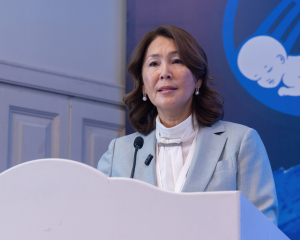
‘Modern equipment is important, but a baby’s life depends first and foremost on the knowledge and experience of doctors and on the whole team working seamlessly together. That is why we not only equip intensive care units, but also create opportunities for healthcare professionals to develop their expertise,’ said Aidan Suleimenova, Founder and President of AYALA Charity Foundation.
Confidential review: learning from every case
How can the quality of neonatal care be continually improved? Kazakhstan’s neonatologists have found one answer in confidential reviews of perinatal deaths. Since 2022, doctors from across the country have met online every week to review cases in which babies have died. The guiding principle is not to assign blame, but to identify weaknesses in the system of care.
‘Since the review programme began, we have held more than 200 online meetings. Since 2024, we have focused particularly on regions with high neonatal mortality — and the rate has fallen in every region we have reviewed. Together with the country’s leading neonatologists, we have developed recommendations based on these reviews. One of the main priorities is to ensure hospitals have enough nurses and to equip every delivery room with devices that provide gentle respiratory support to newborns in the first minutes of life,’ said Nazerke Yerdenova, a neonatologist in the intensive care unit at City Clinical Hospital No. 2.
Atyrau: how the region learnt to save its smallest patients
Until recently, the Atyrau Region was among Kazakhstan’s ‘red zone’ regions for neonatal mortality. Babies with extremely low birth weight were particularly vulnerable. In 2024, 64% of these babies died in the region, and in 2025 the figure was 57%, compared with national averages of 48% and 46% respectively.
The work of the Atyrau Regional Perinatal Centre, which receives the most critically ill babies from across the region, helped turn the situation around. In his presentation, the centre’s neonatologist and intensive care specialist Aslan Mukhanov described a comprehensive package of measures introduced by the team. First, the centre’s medical staff completed a two-stage training programme. Remote multidisciplinary consultations were introduced, enabling clinicians to obtain rapid advice from the country’s leading specialists in complex cases. With support from AYALA Charity Foundation, the centre received a nitric oxide delivery system, which has helped save the lives of 16 children, as well as modern equipment for its Neonatal Surgery Department.
The opening of the department in autumn 2025 was a major achievement. Babies requiring emergency surgery can now be operated on at the centre itself, without losing precious time being transferred to other medical facilities elsewhere in the country. In its first months, three heart operations were performed there, including one on a baby weighing just 600 grams. In total, 18 successful operations on newborns were carried out over the year.
The results soon became visible in the figures. In the first seven months of 2026, neonatal mortality in the Atyrau Region fell more than threefold, to 1.4 per 1,000 live births, compared with 5 per 1,000 a year earlier. Yet for doctors, more important than the statistics themselves is the knowledge that behind every number is a child whose life was saved.
Saving a newborn baby is only the beginning. It is just as important that the child grows up healthy — able to see the world, hear their mother’s voice and develop alongside their peers.
Seeing the world in all its colours
Retinopathy of prematurity is a retinal disease that can lead to complete blindness if not treated in time. Here, every hour matters: in aggressive forms of the disease, doctors have just 24 to 72 hours to perform laser treatment and preserve a baby’s sight.
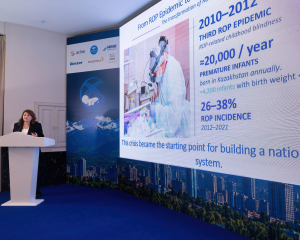
Between 2010 and 2012, retinopathy became a genuine epidemic in Kazakhstan: more than 1,500 babies lost their sight each year. Children with severe forms of the disease were routinely sent abroad for treatment. There were too few specialists and too little modern equipment for examining newborns’ eyes, and retinopathy spread on an epidemic scale.
The I See the World project, launched in 2021 at the initiative of AYALA Charity Foundation and ophthalmologist Assel Sharipova, became part of the solution. Over five years, 20 perinatal centres received wide-field retinal cameras, 13 of them with support from AYALA’s partners. Images of a baby’s eyes can now be sent immediately to an experienced colleague for consultation. In 2022, standardised screening and treatment protocols were introduced nationwide, and neonatal ophthalmologists began receiving specialist training.
Treatment has changed too. Whereas children with severe forms of the disease once had to travel abroad, retinal laser procedures are now performed not only in Almaty and Astana but also in the regions. Between 2021 and 2025, 2,716 premature babies received specialised laser treatment.
‘There are now 17 laser centres operating in the country, eight of them equipped with lasers provided by AYALA. Through the I See the World programme, we have trained 42 paediatric ophthalmologists. Neonatal ophthalmologists are examining more children — more than 38,000 premature babies have been screened during the project. As a result, the incidence of retinopathy has fallen, and Kazakhstan has now reached the level of Japan. Since 2022, cases progressing to the most severe stages have become ten times less common,’ said Assel Sharipova, Candidate of Medical Sciences and a consultant ophthalmologist of the highest qualification category.
Mum, I can hear you!
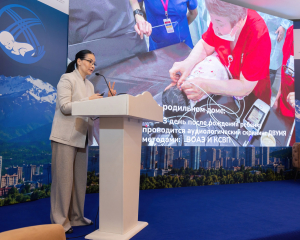
In Kazakhstan, newborns have their hearing checked before they leave the maternity hospital, and for good reason: the earlier a hearing impairment is identified, the greater the chance of helping a child develop speech and hear the world around them. WHO recommends that a diagnosis should be made by three months of age and intervention should begin no later than six months. If the initial screening suggests a possible hearing problem, the baby needs a repeat assessment and an appointment with an audiologist. For many years, however, it was almost impossible to track whether families actually reached the specialist.
‘Screening results were recorded on paper, so we could not say how many children had actually been screened or how many of them went on to see an audiologist. For example, out of 259 newborns, we received hearing-screening data for only 19 babies,’ says Nailya Tulepbekova, Almaty’s Chief Freelance Paediatric Audiologist.
In Almaty, the situation began to change in 2024, when AYALA, together with the DOM Foundation, the SATR Centre and the city’s Public Health Department, launched the I Can Hear project. With support from its partners, the Foundation provided modern hearing-screening equipment to three maternity hospitals and two outpatient clinics. The results of every screening are now entered directly into a single database.
The database is managed by a dedicated Tracking Centre, which follows each baby’s pathway after hearing screening. If a possible impairment is detected, centre staff contact the family, remind them about the follow-up assessment and help them see an audiologist in time. Nine healthcare organisations in Almaty are now connected to the system.
Between March 2025 and July 2026, more than 22,000 newborns passed through the tracking system. Hearing impairment was identified in 87 children. Half had received a diagnosis by three months of age, in line with WHO recommendations, and 84% by six months. Children with hearing loss are fitted with hearing aids through Kazakhstan’s compulsory social health insurance system.
In summer 2026, the project’s experience became the basis for a citywide system, to which all maternity hospitals and outpatient clinics in Almaty are due to be connected in stages. This means that more and more families will be able to identify a problem in time and receive the help they need.
A mother’s milk is more than food
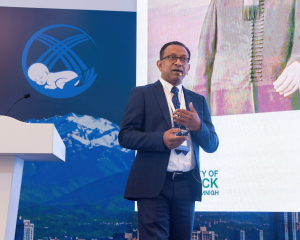
The benefits of breast milk came up repeatedly at the conference: for a premature baby, it is not only nourishment and protection against infection, but also the first and most important connection with their mother. Research presented by Roy K. Philip, Professor at the University of Limerick School of Medicine in Ireland, showed that very low birth weight babies fed exclusively on breast milk are less likely to develop necrotising enterocolitis, a severe and potentially life-threatening inflammation of the intestine. Even so, many mothers still choose infant formula over breastfeeding.
‘There are many reasons why mothers do not breastfeed. To breastfeed successfully, a woman needs support from her family, society and healthcare professionals. In many countries, mothers lose that opportunity because maternity leave is too short. Aggressive marketing of infant formula also plays a part, leading women to believe that it is the best option for their child,’ Professor Roy K. Philip noted.
Kazakhstan is taking a systematic approach to supporting breastfeeding. In 2025, the Ministry of Healthcare, with support from WHO and the Eurasian Fund for Stabilisation and Development, launched a national project. A roadmap was developed for all 20 regions of the country, and 500 national and regional trainers were prepared.
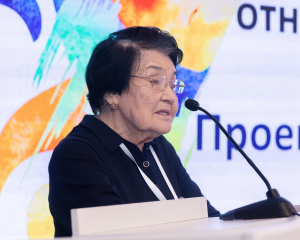
‘It is important that women receive objective information and support so that they can make an informed choice without being influenced by aggressive marketing of breast-milk substitutes. A child’s health begins to take shape from the very first days of life, and by protecting children’s health today, we are building a healthy generation and the future of our country,’ said Professor Tamara Chuvakova, an Honoured Worker of Kazakhstan.
As doctors repeatedly emphasised, a mother’s own milk is always the first choice for a premature baby. If it is unavailable for any reason, donor human milk is used internationally. In Kazakhstan, neonatologists have taken a different step. With support from AYALA, two individual breast-milk banks opened in 2025, in Almaty and Turkistan. They allow this precious nutrition to be safely stored and preserved so that each mother’s milk is reserved exclusively for her own baby.
‘Sometimes even a mother’s own milk does not provide enough nutrients for an extremely premature baby: these babies need much more protein, calcium and phosphorus than babies born at term. In such cases, we add fortifiers — special supplements containing protein, minerals and vitamins — to expressed breast milk. They are recommended for babies born before 32 weeks of gestation and weighing less than 1,500 grams,’ explained Bekturgan Karin, Chief Freelance Neonatologist at the Ministry of Healthcare of the Republic of Kazakhstan.
Every child matters
Today, Kazakhstan’s neonatologists not only learn from and apply international experience, but also share their own expertise with colleagues in neighbouring countries. Doctors travel across Central Asia to conduct masterclasses, help develop clinical protocols for the care of premature babies and invite overseas colleagues to train in Kazakhstan.
Until recently, children with retinopathy were brought from Kyrgyzstan to Kazakhstan for treatment. Now, after training with Kazakhstani specialists, Kyrgyz ophthalmologists perform retinal laser photocoagulation in their own country, so their young patients no longer have to travel abroad for care.
Another encouraging example of this cooperation comes from Mongolia. In 2024, paediatricians and neonatologists from the United Hospital of Bayan-Ölgii Province trained with Kazakhstani doctors in Astana. In January 2026, Kazakhstani specialists then travelled to Mongolia on a working visit, where they provided free training and recommendations on how to organise neonatal services.
‘In 2025, neonatal mortality in our province was 14 per 1,000 live births. In the first nine months of 2026, we managed to halve that figure to 7 per 1,000. For us, this is a major achievement, and we are grateful to the Kazakhstani doctors for their support,’ said Yerzhan Nuksatuly, Director of the United Hospital of Bayan-Ölgii Province.