CLOTHING THAT SAVES MOTHERS’ LIVES
24.11.2025
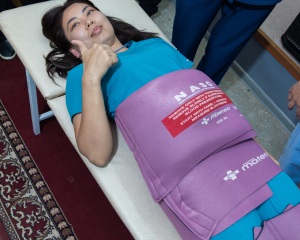
In Kazakhstan, all maternity hospitals and emergency services are equipped with anti-shock garments. This clothing helps doctors win critical time and save women’s lives during postpartum haemorrhages.
Maternal mortality is declining in Kazakhstan. According to data published on the official website of the Ministry of Health, this indicator decreased by 12% in 2024 and by a further 10 percent in the first half of 2025. Experts note that this is the result of comprehensive measures: updating clinical protocols, equipping maternity hospitals, and upskilling medical staff.
Every year, thousands of women worldwide die from postpartum haemorrhage — one of the leading causes of maternal mortality. This problem is particularly acute in regions where specialized care is far away, and every minute is critical.
In 2024-2025, on the initiative of the Department of Maternal and Child Health of the Ministry of Health of the Republic of Kazakhstan, a large-scale project was implemented to equip all obstetric care organizations and ambulance stations in Kazakhstan with Non-Pneumatic Anti-Shock Garments (NASG).
AYALA Charity Foundation, together with its partners PTC Holding, VILED, Alstom, «Kaynar-AKB», Caspian Offshore Construction, DSF, E&Y, ArtStone, Mamma Mia Group, Baby goat, «B.E.G. Floring», St. Regis, Ritz Carlton Almaty, Ritz Carlton Astana, Sheraton hotels, through the international crowdfunding platforms Benevity and TOOBA, and thanks to donations via Kaspi Bank – transferred 350 units of non-pneumatic anti-shock garments to all regions of the country. The total cost of the project exceeded 22 million tenge.
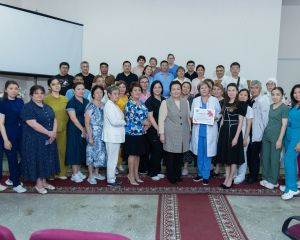
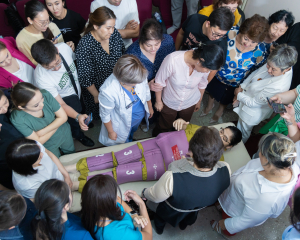
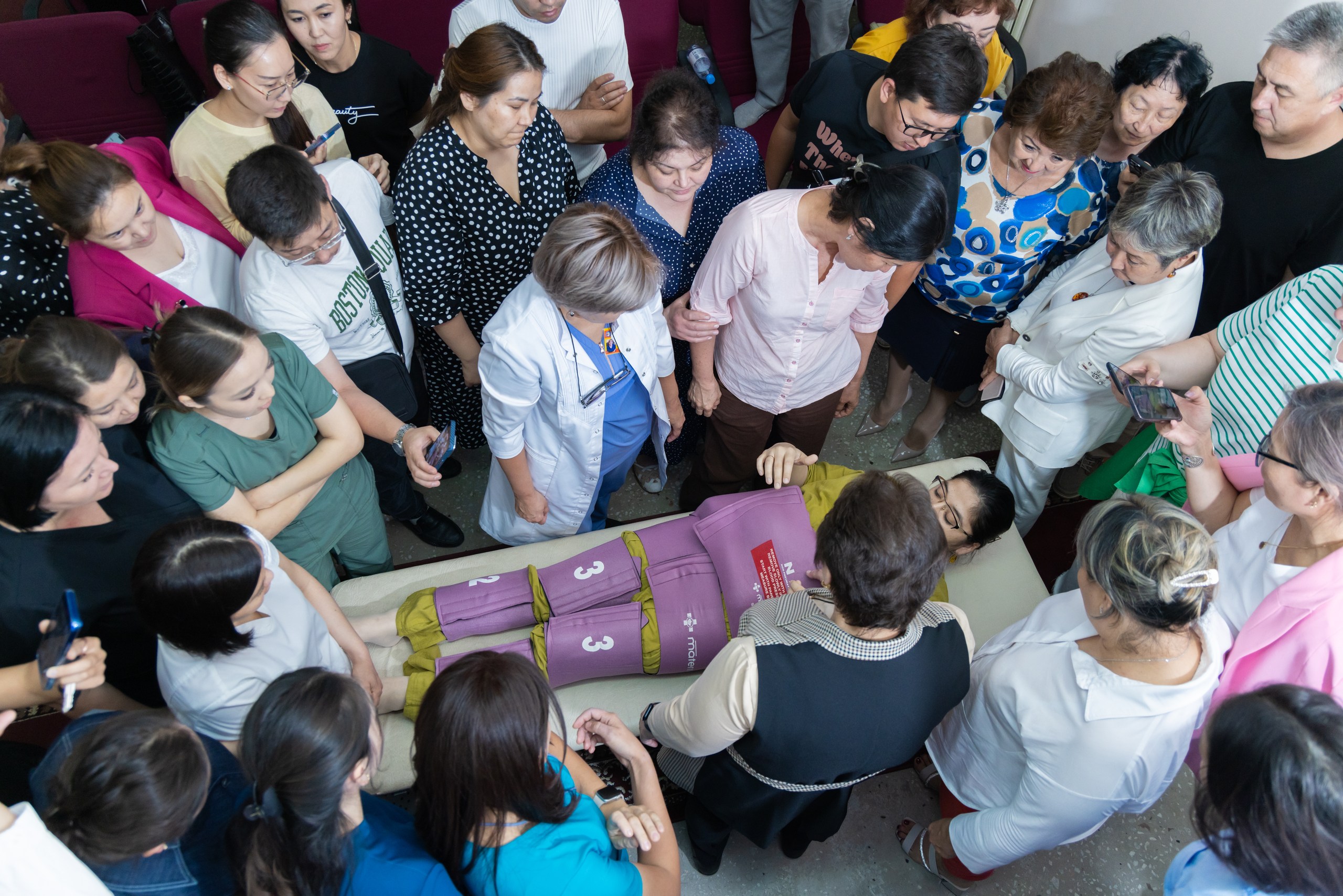
To ensure correct and effective use of this new medical device in Kazakhstan, the Foundation organized training workshops for obstetrician-gynaecologists and emergency medical doctors in all regional centers. The sessions were conducted by Gauri Bapayeva and Gulzhakhan Omarova, Professors, Doctors of Medical Sciences from the Mother and Child Center at UMC Clinic in Astana. During the year, they visited 20 cities to update knowledge and practical skills of obstetricians and emergency paramedics in managing obstetric haemorrhage.
Here is a case from the Regional Multidisciplinary Hospital in Zhezkazgan. AYALA Charity Foundation, together with its partners Big Floring and VILED, delivered 8 units of anti-shock garments to the Ulytau Region. And this saved a young woman’s life.
«Our patient had a first pregnancy and it was complicated by preeclampsia — a dangerous complication characterized by high blood pressure that threatens the health of both mother and child. During the postpartum period, she began to haemorrhage. In this situation, the anti-shock garment was very useful. By the time it was applied, the woman’s total blood loss was 1,200 milliliters, which is classified as severe. Using the NASG, we were able to increase her blood pressure, ensure blood supply to the heart and brain, reduce bleeding, and stabilize her overall condition to begin therapy. This young mother has now been successfully discharged home with her baby,» the hospital representatives said.
In May, the emergency service «103» received a call from Sarzhal village, Abai Region: a postpartum haemorrhage was reported. A mobile team from the Abai District Hospital immediately went to save the woman. The ambulance doctors applied the anti-shock garment that AYALA Foundation had provided to this region thanks to donations on the Benevity platform. «This innovative method for managing obstetric haemorrhage allowed for the rapid stabilization of the patient’s condition by reducing blood loss from the lower body and increasing her blood pressure, after that she was urgently transported by air ambulance to the Regional Perinatal Center in Semey. There, doctors performed conservative treatment, after which the woman was successfully discharged home to her newborn baby,» the medical center shared the good news.
These stories confirm that such a simple medical device helps doctors win in the battle for maternal lives. According to the WHO and UNICEF, the NASG anti-shock garment is included in the list of priority interventions for reducing maternal mortality: the device is reusable, requires no electrical power, and remains effective even during prolonged patient transport by ambulance.
“Our project has become yet another example of effective partnership between the state and the non-profit sector. Through joint efforts, it was implemented in just two years, covering the entire country. This simple and affordable medical device gives doctors a genuine opportunity to save lives, especially in emergency situations where every minute counts. We express our gratitude to the AYALA Charity Foundation for supporting the initiative to introduce a new approach to reducing critical conditions caused by obstetric haemorrhage into medical practice” — noted Magripa Khamitova, Director of the Department of Maternal and Child Health of the Ministry of Health of the Republic of Kazakhstan.
According to estimates by international medical experts, the cost of saving one life through the widespread use of NASG is less than one dollar, thanks to the possibility of multiple uses — up to 100 times — after appropriate sterile processing.
“For us, participating in equipping all maternity hospitals and ambulance stations across the country with anti-shock garments was a logical continuation of the Foundation’s long-term work in developing the nation’s perinatal care system. Through the AYALA Academy project, we hold tens of free seminars annually in Kazakhstan with leading international experts, so that our midwives, obstetrician-gynaecologists, and ultrasound specialists could have access to advanced medical knowledge. We are happy that Kazakhstan has become one of the first countries in Central Asia where the practice of using anti-shock garments has been implemented everywhere and is bringing such inspiring results — saved mothers’ lives,» emphasized Aidan Suleimenova, Founder and President of AYALA Charity Foundation.
This project shows that implementing simple, evidence-based medical technologies can lead to large-scale positive changes in the key indicators used to assess the quality of a country’s healthcare system.