CENTRAL ASIA’S FIRST OPHTHALMIC TOMOGRAPHY SCANNER FOR INFANTS
21.10.2026
Part of the entry fees from the anniversary Almaty Marathon 2026 will go towards purchasing a pioneering ophthalmic tomography scanner for Almaty City Perinatal Centre as part of the I See the World project. The device is specially adapted for examining infants. No country in Central Asia currently has such a scanner.
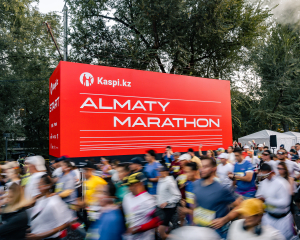
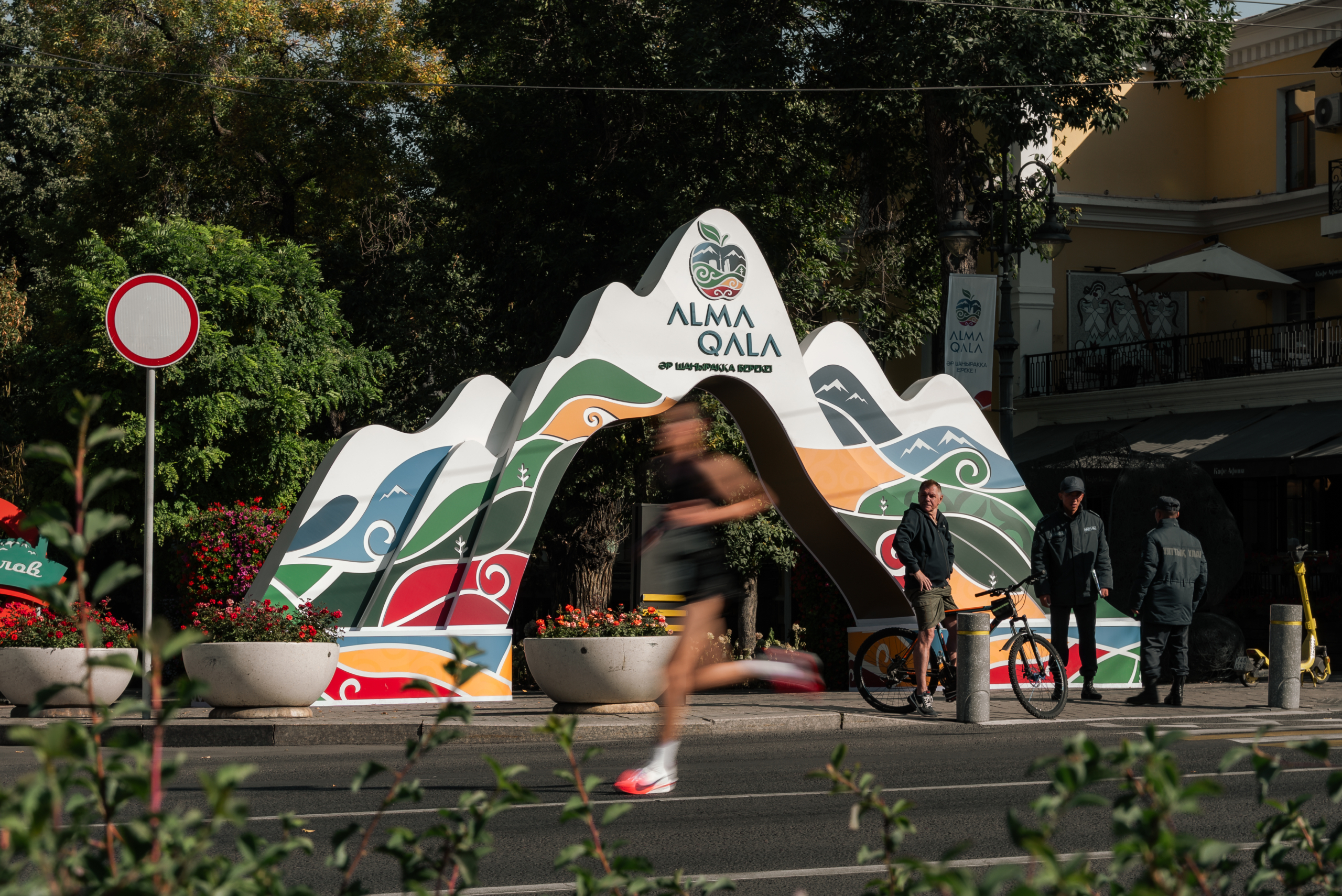
The 15th Almaty Marathon took place on 27 September, bringing together 16,000 participants from 66 countries. The I See the World charitable project is being implemented jointly by the marathon organiser, the Courage to Be the First Corporate Foundation, and AYALA Charity Foundation.
Over the years, the marathon organiser has implemented more than 30 charitable projects, allocating over KZT 500 million to them. Its earliest initiatives focused on building sports facilities and purchasing rehabilitation equipment for institutions supporting children with additional needs. Today, children’s healthcare, particularly the prevention of disability from infancy, has become one of the Foundation’s priorities. Over the past two years, it has allocated KZT 248.3 million to three medical projects in partnership with AYALA.
‘We want children to be able to receive the medical care they need here in Kazakhstan. That is why we do more than simply purchase equipment: we select projects together with doctors and arrange specialist training. This approach enables healthcare institutions to introduce new technologies and use them for many years. Purchasing an ophthalmic tomography scanner for infants will build on this work. The new equipment will allow doctors to carry out examinations from the first days of life and provide essential diagnostics to children from different regions of Kazakhstan,’ said Saltanat Kazybayeva, Executive Director of the Courage to Be the First Corporate Foundation.
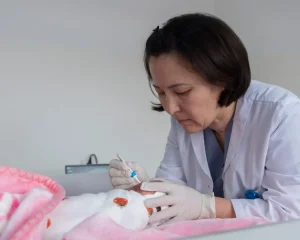
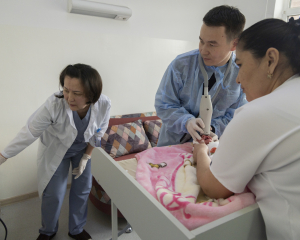
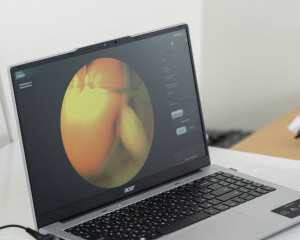
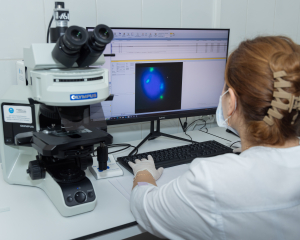
The new equipment is primarily intended for early diagnosis and detailed examination of retinal disorders, including retinopathy of prematurity. Ophthalmoscopy and the wide-field retinal cameras currently used by doctors show the retinal surface and the condition of its blood vessels. Optical coherence tomography (OCT), by contrast, reveals the retina’s layered structure and can detect changes that are invisible during a standard examination.
The portable device is designed to examine babies while they are lying down: they do not need to sit still or fix their gaze. The examination can even be carried out in an intensive care unit.
According to Almaty City Perinatal Centre, 2,169 premature newborns underwent ophthalmic screening there between 2023 and 2025, and 362 children received retinal laser treatment. Project estimates suggest that the new scanner will enable approximately 700 premature newborns to be examined each year, as well as supporting follow-up examinations for children who have previously received treatment.
‘The introduction of this scanner will complete the full pathway of ophthalmic care, from initial screening and more detailed diagnosis to treatment selection and objective assessment of outcomes. The equipment will enable us to examine children with congenital and acquired disorders of the retina, optic nerve and anterior segment of the eye. All examinations will be stored digitally, allowing us to compare findings over time and conduct telemedicine consultations with colleagues in the regions,’ said Assel Sharipova, a leading paediatric ophthalmologist in Kazakhstan, an ophthalmologist of the highest qualification category and Head of the Central Asian Association for Retinopathy of Prematurity.
The Centre also trains doctors in the early diagnosis and treatment of retinopathy of prematurity. Since 2021, 42 ophthalmologists have completed training there, including nine specialists from Kyrgyzstan.
‘At present, families have to take their children abroad, from Russia to Europe, to undergo this type of examination. And it is not just a matter of making one journey. A diagnosis does not necessarily mean that immediate surgery is needed: the condition can begin to progress at any time, so the child’s eyes need regular monitoring. Every visit means travel, expense and anxiety for parents, and for the youngest patients it can also mean anaesthesia. The scanner will be donated to a public hospital, making the examination free of charge for families and available here in Kazakhstan,’ said Aidan Suleimenova, Founder and President of AYALA Charity Foundation.
During earlier phases of the I See the World project, the two foundations installed a retinal camera at Shymkent City Perinatal Centre and laser equipment at Regional Perinatal Centre No. 3 in Turkistan. The laser enables treatment to be provided locally; previously, infants had to be referred to other regions for surgery.
Other joint projects by the foundations include One-Day Clinic in the Turkistan Region, which focuses on the early identification of genetic risks and congenital abnormalities, and Let’s Breathe Life in Almaty, which is introducing a treatment for vascular malformations in children that is new to Kazakhstan.
Since 2025, taking part in any race organised by the Courage to Be the First Corporate Foundation has offered an opportunity to support charitable projects aimed at reducing disability from birth. Runners can also donate any amount to charity when registering. Registration for the Turkistan Marathon is now open.зарегистрироваться